“coffee farmers” search results (11600)

Rwanda Coffee Flavor
Rwandans have been growing coffee since colonial times, but until 1999, its products were still classified as below Class C and were not popular in the global market. The reason for the poor quality is that farmers do not have a fixed procedure for washing coffee beans and do not process coffee fruits according to specifications in time. Buyers buy coffee beans at $0.33 per kilogram, and farmers keep warm by the meagre profits earned at low prices.
2016-08-30 Rwanda coffee flavor characteristics people since colonization times from open
Tanzanian coffee characteristics Tanzanian coffee origin
There are two types of coffee farms in Kenya. One is a large plantation covering more than five acres, but the average elevation is lower. For Kenya coffee, the coffee beans of the large farm are only moderate in quality. The best Kenyan beans are grown on small farms, mostly in the foothills or firehills above five or six thousand feet. Each small farmer can produce only about 20 to 70 bags per season.
2016-05-29 Tanzania coffee characteristics origin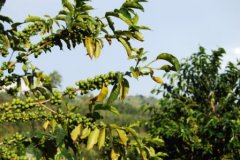
Grade G1 original species of snow caffeine from Worka estate in Waka, Ethiopia
Today, there are still a large number of wild Arabica coffee trees growing in many parts of Ethiopia, averaging between 4200 and 6800 feet above sea level. Now there is a trend of small cultivation, generally planting banana trees for shade at the same time, but due to lack of agricultural technology, herbicides and pesticides are less used. Coffee is Ethiopia's main economic crop and the largest in the country.
2016-07-08 Ethiopia Waka Worka Manor Yega Sheffield Chefe Native
Philippine Cat poop Coffee helps Farmers get Rich
Filipino farmers who grow coffee once tried to kill civets because they stole coffee fruits and later found that civets could help them make a lot of money. We never dreamed that we could make money from them. Rustico Montenegro told Agence France-Presse. The 44-year-old began picking up coffee beans from civet droppings a few years ago. Civet cats live in the jungle and inhabit trees.
2014-06-28 Cat droppings coffee beans civets.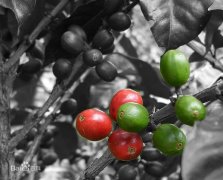
Boutique Coffee small Farmers in Lake Titicaca, Bolivia
South America is rich in coffee beans, and Bolivia is no exception. The unique tropical rain forest environment in some parts of Bolivia provides excellent natural conditions for the growth of organic coffee. The aroma of Bolivian coffee is rich and unique, both the aroma of ground beans and the aroma of coffee are obviously rich, similar to the mixture of flower and fruit aroma, which is impressive.
2016-06-15 Boutique specialty coffee Bolivia Lake Titicaca Tupa Panas small farmers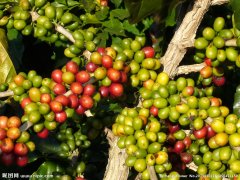
Woka Worka Estate Ethiopian Coffee Bean Yega Sherffi G1 Grade Sherffi Native Species
This bean comes from a single farm in Ethiopia and is processed by the Worka cooperative. Alemayehu Alako Farm is a member of the Waka Cooperative. Waka Cooperative was founded in 2005 and joined the Yirgacheffe Coffee Farmers Cooperati (YCFCU) in 2005.
2016-07-07 Woka Worka Manor Ethiopia Coffee Bean Yega Sherfie Grade Snow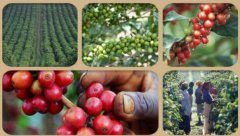
Ethiopian Coffee Conger Cooperative Ethiopia Yejia Sheffield Conger Cooperative
Ethiopia Yirgacheffe Konga Cooperative Ethiopian Yejia Sheffield Conger Cooperative: Conger Cooperative (YCFCU member, Yega Sheffield Coffee Farmers Cooperative Union, Yirga Cheffe Coffee Farmers Cooperative Union) member: 2000 Farmer area: Kongo, altitude near Konga,Yirgacheffe: 2100m left
2016-04-06 Ethiopia Coffee Conger Cooperative Yejia Sheffield
Province of Cajamarca, Peru (Cajamarca)
Located in northeastern Peru, CENFROCAFE is a non-profit small farmers' cooperative to help as many as 2,000 farmers manage the production of coffee, cocoa and other crops, improve their quality and help farmers promote their products to the international market.
2014-06-19 Coffee knowledge Peruvian Coffee Coffee Encyclopedia
Conastale Manor
Conastair Farm existed from 1801 to 1842. From 1801 to 1825, the first generation farmer was Colin McClarty, and the second generation owner was his son Alexander McClarty. From 1825 to 1842, the management right of the farm was handed over to the third generation farmer Alexander Campbell. After 1842, there was no way to examine the information about the farm, Connor.
2014-08-20 Coffee knowledge Coffee Manor Conastale Manor
Coffee production in Yunnan plummeted by 40% in 2013-2014
In late March, the coffee bean harvest season of 2013-2014 is coming to an end. Under the impact of natural disasters and sudden changes in prices, the confidence of Yunnan farmers has been undermined. Some farmers have given up picking and their output has plummeted by 40%.
2014-06-03 Coffee news coffee production Yunnan coffee production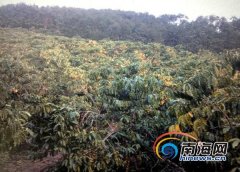
Baisha more than 300,000 jin of coffee beans have not been bought into hot potato coffee farmers are looking for buyers.
Baisha Coffee growing in Hainan Baisha Crater (reporter remake) Baisha Coffee growing in Hainan Baisha Crater (reporter remake) original title: Baisha more than 300,000 jin coffee beans unbought coffee farmers bitter looking for buyers growing in Hainan Baisha Crater White sand coffee, because of coffee flavor, good taste, it was once a favorite in the market
2015-01-08 White sand ten thousand jin coffee beans no one buy hot potato coffee farm bitter buyer
Introduction of Rwanda Coffee Flavor producing area Lutexilo, West Province of Malaba Coffee
The biggest harvest season for Rwandan coffee is during the main rainy season, from March to the end of May. During the harvest season, farmers spend most of their day picking coffee fruits by hand. In the afternoon, farmers carry coffee fruits in traditional baskets made of banana leaves to a cleaning station a few hours away. The craftsman picks the best quality coffee fruit with crimson by hand.
2016-07-13 Rwanda Coffee Flavor producing area introduction Malaba Raba Western Province Texi
Characteristics of coffee beans in Rwanda planting methods of coffee beans in Rwanda
Rwandans have been growing coffee since colonial times, but until 1999, its products were still classified as below Class C and were not popular in the global market. The reason for the poor quality is that farmers do not have a fixed procedure for washing coffee beans and do not process coffee fruits according to specifications in time. Buyers buy coffee beans at $0.33 per kilogram, and farmers keep warm by the meagre profits earned at low prices.
2016-05-08 Rwanda coffee beans characteristics cultivation methods people colonization times
Development of Chinese Coffee Market Chinese Coffee starts from Pu'er
What binds Jin Jihui, Alex and Hute to Yunnan is the thousand-year-old tea village Pu'er. This small border town, which has changed its name from Simao to Pu'er because of its famous Pu'er tea, now wants to add another label to its city card, the Coffee Capital of China. In 2007, Jin Jihui, a middle-aged literary and artistic classmate with Jia Jingwen and Xu Jinglei at the Beijing Film Academy, came to Yunnan
2014-11-06 Coffee knowledge Chinese coffee market coffee market development Pu'er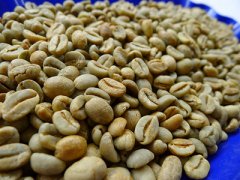
Ethiopia Yega Sheffield sun basking class Magi coffee bean boutique coffee class Maggie coffee style
Coffee beans details: country: Ethiopia level: G3 producing area: Banchi Magi primeval forest altitude: 1500-1700 m treatment: sun varieties: Typica, Heirloom producers: small farmers harvest centralized treatment flavor: jackfruit, spices, wine Ethiopian coffee is mainly produced in eight major producing areas: Ekempti, Limu, Illubabor, Djimma
2016-03-21 Ethiopia Yega Sheffield Sun Banki Maggie Coffee beans Fine goods Coffee
The Historical Origin of Rwandan Coffee
Historical editors originate that Rwandans have been growing coffee since colonial times, but until 1999, its products were still classified as below Class C and were not popular in the global market. The reason for the poor quality is that farmers do not have a fixed procedure for washing coffee beans and do not process coffee fruits according to specifications in time. Buyers buy coffee beans at $0.33 per kilogram, which farmers earn at low prices.
2016-06-01 Rwanda Coffee History Origin Editor Human self colonization
Xi Jinping and Peng Liyuan drank Costa Rican coffee at the farmhouse.
Xi Jinping and his wife Peng Liyuan visited an ordinary coffee farmer in Costa Rica on June 3, 2013 local time. Watch coffee, smell coffee, taste coffee. Chinese President Xi Jinping and his wife Peng Liyuan, who are on a state visit to Costa Rica, visited the Zamora family of local farmers on June 3, local time. The picture shows Xi Jinping tasting the coffee produced by farmer Zamora.
2016-06-24 Peace Peng Liyuan peasant family drank Costa Rica coffee
Brazilian coffee production plummets, Yunnan curry farmers hoarding goods are bullish.
Recently, the news on Weibo that the global supply of coffee beans has shrunk sharply and coffee prices will rise all the way has attracted everyone's attention. Some netizens who usually like to drink coffee say they want to buy some coffee beans to store them, while others think that Yunnan farmers can finally get a higher annual income. So will the price of coffee rise this year? Does it cost more to drink coffee at the retail terminal? The reporter carried out this.
2014-12-08 Brazil coffee production sharp decline Yunnan Cajun hoarding bullish recent Weibo
Kenyan coffee flavor and taste what brand of Kenyan coffee is good?
There are two types of coffee farms in Kenya. One is a large plantation that covers an area of more than five acres, but the average elevation is low. In the case of Kenyan coffee, the coffee beans of the large farms are of medium quality. The best Kenyan beans come from small farms, most of which are located in the foothills or volcanic slopes above 5,000 to 6,000 feet. Each small farmer has a capacity of only 20 to 70 bags per season.
2016-07-27 Kenya coffee flavor taste introduction boutique coffee beans what brand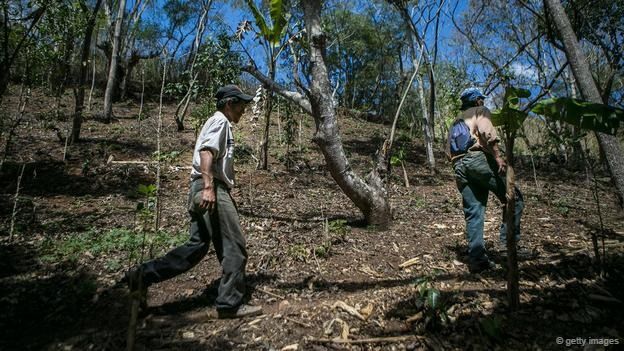
Coffee crisis: mankind's favorite drink is coming to an end?
While sipping lattes and espressos and reading newspaper headlines, we don't seem to feel much threat from climate change. Yet travel thousands of miles to the origin of this refreshing drink and you get a real sense of how real the threat of climate change is. Recently, from the University of California Santa Barbara (University of Californ)
2015-08-31 coffee crisis human love drink towards doomsday